ERP Software Development in India — Jaipur Studio
Replace Tally-plus-spreadsheet chaos with ERP modules your floor and accounts team will actually run — phased, with code you own.

ERP software development in India: the short answer
TheTriFusion (Trifusion Infotech Private Limited) builds custom ERP software from a Jaipur, Rajasthan studio for Indian manufacturers, traders, and multi-branch operators who have outgrown Tally-plus-spreadsheets. We ship finance and GST ledgers, inventory and warehouse, procurement, production planning, sales and distribution, HR/payroll, multi-branch control, and reporting — in phases you can run. You own the code. A multi-module ERP programme typically starts from ₹6,00,000 on our published plans; a single ops slice can start lower. Sales pipelines and lead CRM live on custom CRM development, not on this page.
- Starting price
- From ₹6,00,000 (multi-module ERP; Standard plan)
- You own
- Source code, after completion and payment
- India modules
- GST finance, inventory, MRP, multi-branch — as scoped
- Office
- 5th Floor, Amoro Building, Patrakar Colony, Jaipur, Rajasthan 302020 · +91 63781 33780 · Mon–Sat 10 AM–7 PM IST
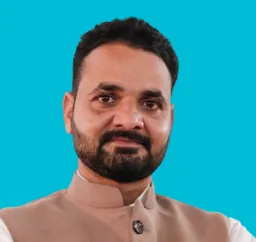
CEO, TheTriFusion
Amardeep is CEO of Trifusion Infotech Private Limited (TheTriFusion), a software development company in Jaipur, Rajasthan. The studio has operated since 2023 with a team of about ten developers and consultants. This erp software development page is reviewed by Amardeep.
Our clients
Live products from the Jaipur studio
Named live sites and products we can show publicly — open any mark to verify the URL. Concept demos stay on the portfolio page and are not listed here as clients.
ERP modules we build from Jaipur
TheTriFusion builds custom ERP software in Jaipur — finance with GST, inventory, procurement, manufacturing, sales distribution, HR/payroll, multi-branch, and reporting — for Indian manufacturers and traders.
Finance & GST
Ledgers, GST invoices, credit/debit notes, and Tally export or sync when scoped.
Inventory & warehouse
SKU, batch/lot, bins, transfers, and stock that matches the invoice.
Procurement & manufacturing
Indent→PO→GRN, BOM, work orders, and material issues for the shop floor.
Distribution, HR & branches
Order-to-dispatch, payroll when scoped, multi-branch stock and books.
Core Technologies & Tools
ERP for Indian SMEs (studio in Jaipur, Rajasthan)
GST finance, inventory, procurement, manufacturing, HR and multi-branch ERP from Jaipur for buyers across India. Multi-module programmes typically start from ₹6,00,000. Sales CRM stays on custom CRM development. See also custom software.
Manufacturers in Sitapura and traders across Rajasthan usually need stock that matches the invoice, PO→GRN discipline, and books a CA can close — not a CRM with an inventory tab. We phase modules so the floor keeps running. You own the code after payment. Tally, SAP or Odoo stay the right buy when they already fit; we will say so. Live ops proof: Connect Dairy.
Mobile warehouse companions sit on mobile app development. Spreadsheet cutovers without a full ERP map sit on business modernization.
What ERP means on this page
ERP here is the operating system of the business: stock that matches the invoice, purchase orders that match goods receipt, production that consumes BOMs, and a ledger that closes GST without a weekend of spreadsheet surgery. It is not a sales CRM with an inventory tab bolted on. If your brief is leads, stages, WhatsApp follow-ups and quotations, start on custom CRM development. If your brief is warehouses, job cards, GST books and branch stock, stay here.
We build from Jaipur for SMEs across Rajasthan and India. Delivery is remote with weekly demos. Hosting and cloud accounts should sit in your company's name. Related greenfield work that is not a full ERP sits on custom software development; spreadsheet cutovers without a full module map sit on business modernization.
What's included
- Finance and accounting with GST invoices, credit/debit notes, and Tally export or sync when scoped
- Inventory, batch/lot, warehouse bins, and stock valuation
- Procurement: indent → PO → GRN → three-way match
- Manufacturing / production planning: BOM, work orders, material issues
- Sales and distribution: order → dispatch → e-invoice-ready documents
- HR and payroll modules when attendance and statutory payslips are in scope
- Multi-branch / multi-godown with role-based stock and books
- Operational dashboards and exportable BI reports
Finance and accounting with GST
Indian SME finance in an ERP is not a Western chart-of-accounts transplant. Day one must hold GST invoices, credit and debit notes, HSN/SAC on lines, place-of-supply logic, and a clean trail for GSTR-facing exports. We model ledgers, party balances, bank reconciliation helpers, and period close so your accountant is not retyping every voucher into Tally at month-end — unless you explicitly want a one-way Tally push, which we scope as an integration, not a miracle.
We do not replace GSTN, do not file returns for you, and do not invent a “GST-certified” badge. We build the books and documents your CA can trust, then export or sync in the format the scope names. Payment gateways and UPI collection can sit beside the ledger when collections are part of the product; bank rails that need a licensed partner belong next to fintech app development.
Inventory and warehouse
Inventory is where most Jaipur and Rajasthan operators feel the spreadsheet break first: one godown shows free stock, another shows reserved, and the salesman has already promised a lot that is in transit. The ERP module tracks SKUs, variants, batches or lots, serials when jewellery or pharma needs them, bin locations, stock transfers, and valuation methods you name in discovery (weighted average is common; FIFO when the brief requires it).
Warehouse flows cover goods receipt against PO, put-away, pick lists for dispatch, and cycle counts with variance reasons. Mobile companions for floor staff sit on Android or iOS when scanners and offline checks matter. Connect Dairy-style ops (connectdairy.in) show why role-based stock and P&L beat a shared Google Sheet once fleets and godowns multiply.
Procurement
Procurement in a custom ERP is a chain, not a form: indent from the floor or planner, approval by role, purchase order to the vendor, goods receipt note, and a three-way match against the vendor invoice before payment is released. Rate contracts, preferred vendors, and landed-cost fields (freight, duty, packing) are in scope when the purchase team already tracks them on paper.
Rajasthan traders who import or buy from multiple states need IGST vs CGST/SGST clarity on the PO and the invoice — the same place-of-supply rules as finance, not a separate “tax plugin.” We will not promise IndiaMART auto-buying or scraped vendor catalogues; vendor master data comes from your team.
Manufacturing and production planning
Manufacturing ERP for Sitapura, VKIA, and similar clusters usually starts with a bill of materials, a work order, material issue to the shop floor, and finished-goods receipt — not a full APS suite on day one. We model multi-level BOMs, scrap and yield, routing steps when you have them, and capacity as a simple calendar when that is enough. Complex finite scheduling is a later phase; we say so in the written scope instead of selling a wall of buzzwords.
Textiles, gems polishing, and metal fabrication each bring different unit measures (metres, carats, pieces). The data model follows your unit of measure, not a generic “qty” column that breaks costing. Job-work to outside processors (a common Rajasthan pattern) gets its own issue/return documents so stock does not vanish into a WhatsApp thread.
Sales and distribution
Sales and distribution in ERP is order capture, credit check against party ledger, allocation from available stock, packing and dispatch notes, e-way-bill-ready fields, and invoice generation that matches what finance posts. It is not a marketing automation pipeline. Lead scoring and stage coaching stay on the CRM page; here the salesman or dealer portal confirms what can ship today.
Distribution networks across Rajasthan — Jaipur hub, Jodhpur and Udaipur depots, dealer credit limits — need multi-branch stock visibility without letting every dealer edit the master price list. Role-based price lists, schemes, and quantity breaks are scoped from your actual rate cards, not from a demo “industry pack.”
HR and payroll
When the ERP must close payroll with the same attendance that production uses for overtime, we add HR and payroll modules: employee master, attendance import or biometric hook, leave, statutory components you list (PF, ESI, professional tax as applicable), and payslip PDFs. We are not your labour-law advisor; your CA or HR consultant owns the statutory interpretation. We encode the rules you approve in writing.
Factories with contract labour and piece-rate workers need different pay calculation paths than a pure monthly salary office. Discovery locks which paths go live in phase one. Field attendance apps, when needed, reuse the same mobile stack as warehouse apps.
Multi-branch control and reporting / BI
Multi-branch ERP means each branch or godown has its own stock and optionally its own books, with a head-office view that consolidates without double-counting transfers. User roles decide who can see cost, who can approve credit, and who can open a period. Inter-branch transfers create the documents finance expects; they do not silently edit quantities.
Reporting and BI on our builds start with operational dashboards — stock cover, open POs, overdue receivables, production vs plan — and exportable reports your accountant already knows how to read. Heavy data-warehouse projects are out of scope unless the brief says so; most SMEs need honest numbers every morning, not a separate analytics product. AI assistants on top of ERP data, when useful, sit next to AI development with a human review step.
Industries we build ERP for in Jaipur and Rajasthan
We scope modules from the process you run, not from a logo wall. The industries below are the briefs we see most from Jaipur and Rajasthan operators — manufacturing units, trading and export houses, textiles, gems and jewellery, construction, pharma distributors, education groups, and multi-store retail. Each paragraph names the modules that usually go first.
Manufacturing
Discrete and process manufacturers in and around Jaipur need BOM, work orders, material issues, and finished-goods costing before they need a fancy planner. Phase one usually pairs inventory with production and a GST-ready invoice. Machine-wise OEE is a later conversation; we will not pretend a first release includes every ISA-95 layer.
Trading and export
Trading and export houses care about lot traceability, packing lists, multi-currency party ledgers when exports are in scope, and documents that match the commercial invoice. Export documentation beyond what your CHA already handles is scoped carefully — we build the ERP records, not the shipping line booking. Sitapura and related exporter clusters often start with inventory + sales + GST finance.
Textiles
Textile units measure in metres, lots, and shade-wise stock. ERP must hold greige vs finished, process stages (dyeing, printing, finishing) when you run them in-house or on job-work, and order-wise reservation so one buyer’s lot is not sold twice. Quality holds and shade approvals are first-class statuses, not spreadsheet colours.
Gems and jewellery
Jaipur’s gems and jewellery trade needs carat and piece tracking, tagging, job-work to karigars, and often photo-linked SKUs. Melting loss, metal purity, and stone packets are part of costing when you already track them. We do not put “blockchain provenance” on the homepage; we put stock that matches the tag on the tray.
Construction
Construction and contractors need project-wise material issues, site stock, vendor bills against work orders, and a rough project cost view. Full Primavera-style scheduling is not the first release. Site storekeepers with Android apps and a Jaipur head-office console is a common shape.
Pharma distribution
Pharma distributors need batch, expiry, schedule-H flags as data fields you define, and FEFO picking. We are not a CDSCO consultant and we do not sell a “FDA-approved ERP.” We build inventory and billing discipline your QA SOP can live with. Temperature-logger hardware integration is only in scope when you name the device API.
Education
Schools and coaching groups that want ERP-shaped operations usually need fee ledgers, inventory for books and uniforms, multi-campus roles, and payroll — not a learning-management system. LMS and student apps are a different product conversation under custom software or mobile apps.
Retail
Multi-store retail needs POS-adjacent stock, store transfers, and HO pricing. DailyConcepts India (dailyconceptsindia.com) is a live example of storefront plus POS-style admin. Pure D2C storefront work without warehouse depth belongs on ecommerce website development.
ERP implementation process
Discovery locks entities, godowns, GST registrations, and the first module that can go live without stopping the floor. We write a scope with a definition of done — not a slide deck of “digital transformation.” Data migration from Excel/Tally exports gets a rehearsal on staging with row counts you can check. Parallel run means the old books stay open until the new module is boring. Cutover is a dated checklist, not a weekend hope.
Typical rhythm after kickoff: week-by-week demos from Jaipur, UAT on your staging URL, training for the roles that touch the module, then production cutover with a support window from the published plan. Broader programmes stay phased — finance+inventory first, manufacturing second, HR third — so you are not waiting a year for a big-bang go-live. DevOps covers CI/CD and cloud when you want the pipeline in your AWS/GCP/Azure account.
Phased delivery shape
| Phase | Usual focus | Exit check |
|---|---|---|
| Phase 1 | Inventory + GST billing (or finance + one warehouse) | Stock and invoices match for two close cycles |
| Phase 2 | Procurement and/or production | PO→GRN→issue chain used daily without shadow Excel |
| Phase 3 | Multi-branch, HR/payroll, deeper BI | Roles and consolidations signed off by HO |
Custom ERP vs Tally, SAP, and Odoo
Buy Tally when accounting is the product and inventory is light. Buy Odoo when a known open-source ERP shape fits and you accept its module model and partner economics. Buy SAP (Business One or larger) when you already have the budget, the internal IT, and a process that maps to the vendor’s playbook. Commission custom ERP when your BOM, job-work, jewellery tagging, or multi-branch credit rules will fight those products every week — and you want code you own.
We will tell you to buy the boxed product when that is the honest answer. Three-year seat maths depends on headcount and modules; we will not invent a TCO chart on this page. Salesforce stays on its own page when Sales Cloud already fits; MLM compensation trees stay on MLM CRM.
How to choose
| Tally | SAP / Odoo | Custom ERP (this page) | |
|---|---|---|---|
| Best for | Books-first SMEs with simple stock | Standard ERP processes and partner ecosystems | Process, costing, or branch rules those tools will not hold cleanly |
| Cost shape | Licence + CA effort; cheap entry | Licences or partner fees, forever | From ₹6,00,000 multi-module on published plans; you own the code |
| Change control | Vendor release cycle | Partner + vendor roadmap | Your backlog; weekly demos from Jaipur |
| Integrations | Exports and known bridges | Marketplace and partner apps | Tally sync, WhatsApp alerts, gateways — as scoped |
ERP software development cost in India
Published TheTriFusion plans for this family of work on pricing are ₹3,00,000 (Basic), ₹6,00,000 (Standard), and ₹11,00,000 (Premium). A single CRM-style module can sit at Basic; a serious multi-module ERP programme usually starts at Standard (₹6,00,000) or Premium (₹11,00,000) after discovery. The signed number follows a written scope. What moves cost: number of godowns and GSTINs, manufacturing depth, mobile apps, data migration volume, and how many old Excel processes must go live together.
Hosting on your server or cloud account is a yes when the scope says so. Retainers after the included support window are optional. We do not publish a fake “ERP in 15 days” price.
Published plans (CRM/ERP family)
| Plan | Starting price | Typical ERP use |
|---|---|---|
| Basic | ₹3,00,000 | Single ops or CRM module MVP — rarely a full ERP |
| Standard | ₹6,00,000 | Multi-module ERP start (e.g. inventory + GST finance + one more) |
| Premium | ₹11,00,000 | Broader ERP programme: branches, manufacturing, mobile |
Tech stack
Typical stack: React admin for dense operational screens, Node.js or similar API layer, PostgreSQL for transactional data, and React Native when warehouse or sales staff need a phone companion. REST or webhook integrations for Tally exports, payment gateways, and WhatsApp alerts are scoped per project. We match the stack to your hosting preference and to any existing systems you must not rip out in phase one.
Connect Dairy and DailyConcepts India are live operations and POS-adjacent proof points already on this site. Outcome metrics stay unpublished until a client allows a named figure.
Case studies: Connect Dairy and DailyConcepts.
Who leads the work
Named people on the team page: Anjali and Ajay, back-end developers; Manvender, Project Manager; Rahul and Subhash, front-end developers; Ashutosh and Karan, mobile developers. Delivery is in-house in Jaipur. Bios and personal LinkedIn URLs are not invented here.
Technologies & Frameworks We Use
Web admin
React for dense ERP screens accountants and planners use daily.
API & data
Node.js APIs and PostgreSQL for transactional stock and ledgers.
Mobile & integrations
React Native for floor apps; Tally/WhatsApp/gateway hooks as scoped.
What You Receive With Every ERP Software Development Project
How we implement ERP in phases
- 01
Discovery & module map
Lock GSTINs, godowns, roles, and the first module that can go live without stopping the floor.
- 02
Data model & migration rehearsal
Entities, BOMs and opening stock on staging — with row counts you can check before cutover.
- 03
Build in visible phases
Weekly demos from Jaipur. Finance+inventory first is common; manufacturing and HR follow.
- 04
Parallel run, train, cut over
Old books stay open until the new module is boring. Support window from the published plan.
Why Choose TheTriFusion For ERP Software Development
100% In-House Jaipur Engineering
No anonymous subcontractors or black-box freelancers. Direct Slack/WhatsApp access to the developers writing your code.
100% IP & Source Code Ownership
Full repository handover, clear documentation, and database schemas with zero vendor lock-in from day one.
Weekly Working Demos
We ship visible milestone builds every Friday. You test functioning software on staging, not slide decks.
30-Day Free Post-Launch Warranty
Every deployment includes a 30-day bug-fix guarantee, monitoring, and go-live assistance for store & server setups.
Transparent Estimates & Scoping
Multi-module ERP start (Standard plan)
First live module often 8–14 weeks after discovery. Broader ERP programmes are phased so the floor keeps running.
Share your requirements, mockups, or workflow notes. We return a written scope of work within 24 hours.
Case Study & Proven Results
Connect Dairy ops + DailyConcepts admin
Connect Dairy (connectdairy.in) is live agri-logistics with fleets, roles and P&L. DailyConcepts (dailyconceptsindia.com) is storefront plus POS-style admin. Both prove operational software beats shared spreadsheets once godowns and roles multiply.
ERP software development in Jaipur
Custom ERP software from TheTriFusion in Jaipur covers finance with GST, inventory and warehouse, procurement, manufacturing and production planning, sales and distribution, HR/payroll, multi-branch control, and reporting. Programmes are phased so the floor keeps running. Multi-module work typically starts from ₹6,00,000.
Sales pipelines and lead CRM are a separate product on custom CRM development. We cross-link both pages so buyers land on the right brief. Live ops references include Connect Dairy and DailyConcepts India on this site.
Frequently Asked Questions About ERP Software Development
How much does custom ERP software development cost in India?
TheTriFusion published plans in this family start at ₹3,00,000, ₹6,00,000 and ₹11,00,000. A multi-module ERP programme typically starts from ₹6,00,000 after discovery. The signed price follows a written scope.
Custom ERP or Tally — which should an SME choose?
Stay on Tally when accounting is enough and stock is simple. Commission custom ERP when warehouses, BOMs, job-work or multi-branch credit rules outgrow Tally-plus-Excel. We say so even when that means “keep Tally”.
Do you replace SAP or Odoo?
Sometimes for SMEs that do not need the full vendor stack. If SAP Business One or Odoo already fits, buy that and use a partner. We build custom when those shapes will not hold your process without constant fighting.
Can the ERP handle GST invoices and Tally sync?
Yes, when those are in the scope: GST invoices, credit/debit notes, and Tally export or sync. We do not file GST returns for you and we do not replace GSTN.
Do you build manufacturing / MRP modules?
Yes: BOM, work orders, material issues and finished-goods receipt are common phase-two modules. Full finite-capacity APS is scoped separately and is not assumed in the first release.
How is this different from your CRM page?
This page is ERP: stock, books, procurement, production, distribution, HR and branches. The CRM page is pipelines, leads and sales follow-ups. Many clients use both; they are separate products with separate scopes.
How long does ERP implementation take?
A first live module is often 8–14 weeks after discovery. Multi-module programmes are phased over several quarters so the floor keeps running. You get a written timeline with the scope.
Who owns the ERP source code?
You do, after completion and payment, for the agreed deliverables. Hosting and cloud accounts should be in your company's name.
Can we run multi-branch stock from Jaipur HO?
Yes. Multi-godown and multi-branch with role-based access is a standard module set. Inter-branch transfers create documents; they do not silently edit quantities.
Do you offer Salesforce as ERP?
Salesforce on our site is Sales Cloud customization, not a manufacturing ERP. See Salesforce services when you already pay for an org. Manufacturing and warehouse depth belong here or on a boxed ERP you buy.
Related services and guides
Custom CRM development
Pipelines and lead follow-ups beside the ERP.
Custom software development
When ERP is one module of a larger product.
Business modernization
Spreadsheet cutovers into ERP modules.
RPA services
Invoice and Tally bots beside the ERP.
DevOps & cloud
Hosting and CI/CD under the ERP stack.
Mobile app development
Warehouse and floor companions.
AI development
Assistants on ERP data with a human step.
Hire dedicated developers
Named seats for ERP modules and APIs.
Connect Dairy case study
Live ops — fleets, roles and P&L.
DailyConcepts case study
Live storefront plus POS-style admin.
MLM CRM development
When the hard problem is a compensation tree, not warehouse MRP.
Ecommerce website development
Storefronts that may later sync stock from this ERP.
Related services
Need ERP that is not another spreadsheet?
If Tally or Odoo already fits, buy that. If warehouses, BOMs or multi-branch rules do not, share the process. We return a phased ERP range from Jaipur.